
A wound is scary until someone explains it.
My Wound Guide helps you understand what’s happening, find the right dressings and supplies nearby, and know exactly what to tell your doctor — all in plain language, day or night.
Built for the wounds people manage at home
Diabetic foot ulcers
Offloading, moisture balance and daily foot checks, plus the warning signs that need same-day attention.
Pressure injuries
Staging in plain language, repositioning schedules, and support surfaces that reduce further damage.
Venous leg ulcers
Compression explained properly, why it matters more than the dressing, and how to tell it is working.
Surgical wounds
What normal healing looks like week by week, and what separation or drainage actually means.
Skin tears and abrasions
Gentle dressings for fragile skin, and adhesive choices that do not cause the next tear.
Burns and blisters
First aid that helps rather than harms, depth signs, and when a burn needs a clinic.
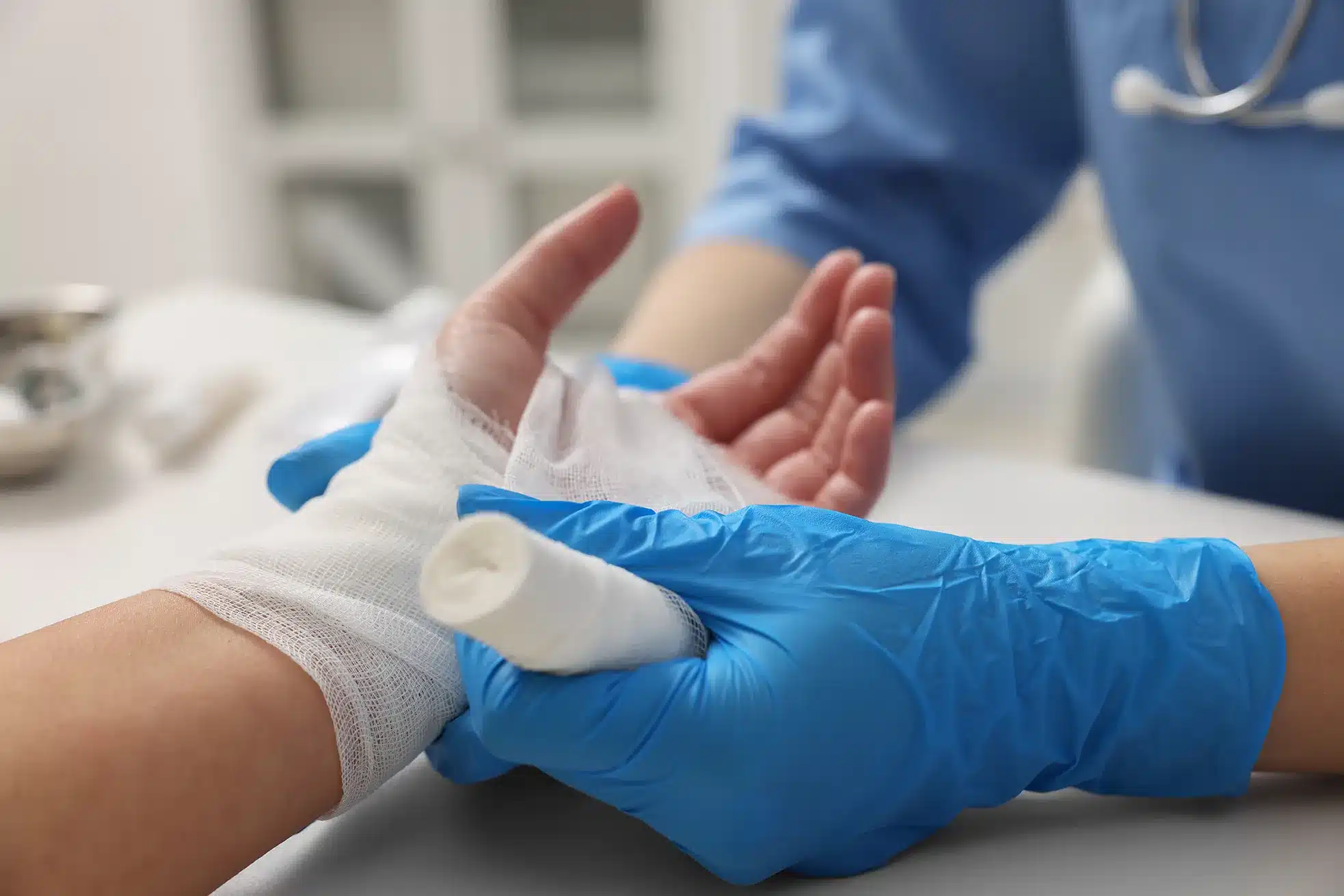
Get emergency care now if you notice any of these
- Red streaks spreading from the wound, or fast-spreading redness
- Fever, chills, confusion, or feeling suddenly very unwell
- Foul smell, black tissue, or skin that crackles when touched
- Bleeding that will not stop after 10 minutes of firm pressure
- A wound from a bite, a puncture, or something dirty and deep
- Sudden severe pain, or a wound that grows quickly
Three steps, about two minutes
You do not need to describe your wound in medical language. Just show it.
Photograph the wound
Good light, phone held straight above, and a coin or ruler beside it for scale. We walk you through it and tell you if the photo needs redoing before it is assessed.
Answer six short questions
How long you have had it, whether it hurts, whether it is draining, and a little about your health. Diabetes, circulation problems and certain medications change what suits your wound.
Get your guide
A description of what the photo appears to show, dressing and supply categories that fit, matching products you can buy, education written for patients, and a clear signal about whether to contact your clinician today.
Two sides of the same directory
If you are a patient or caregiver
- Run a wound check from any phone, free
- See supplies grouped by what they do, not by brand
- Track healing across weeks with photos and measurements
- Set reminders for dressing changes
- Export a one-page summary for your appointment
If you make wound care products
- List products where the buying decision is being made
- Fixed listing fee, no bidding for position
- Clinical review of every entry before it goes live
- Reporting on impressions by category and region
- No patient identities, images or contact details, ever
Reach patients at the moment of decision
8.2M
People in the US living with a chronic wound
70%
Of dressing changes happen at home, not in clinic
1 in 3
Patients report buying the wrong supply type